
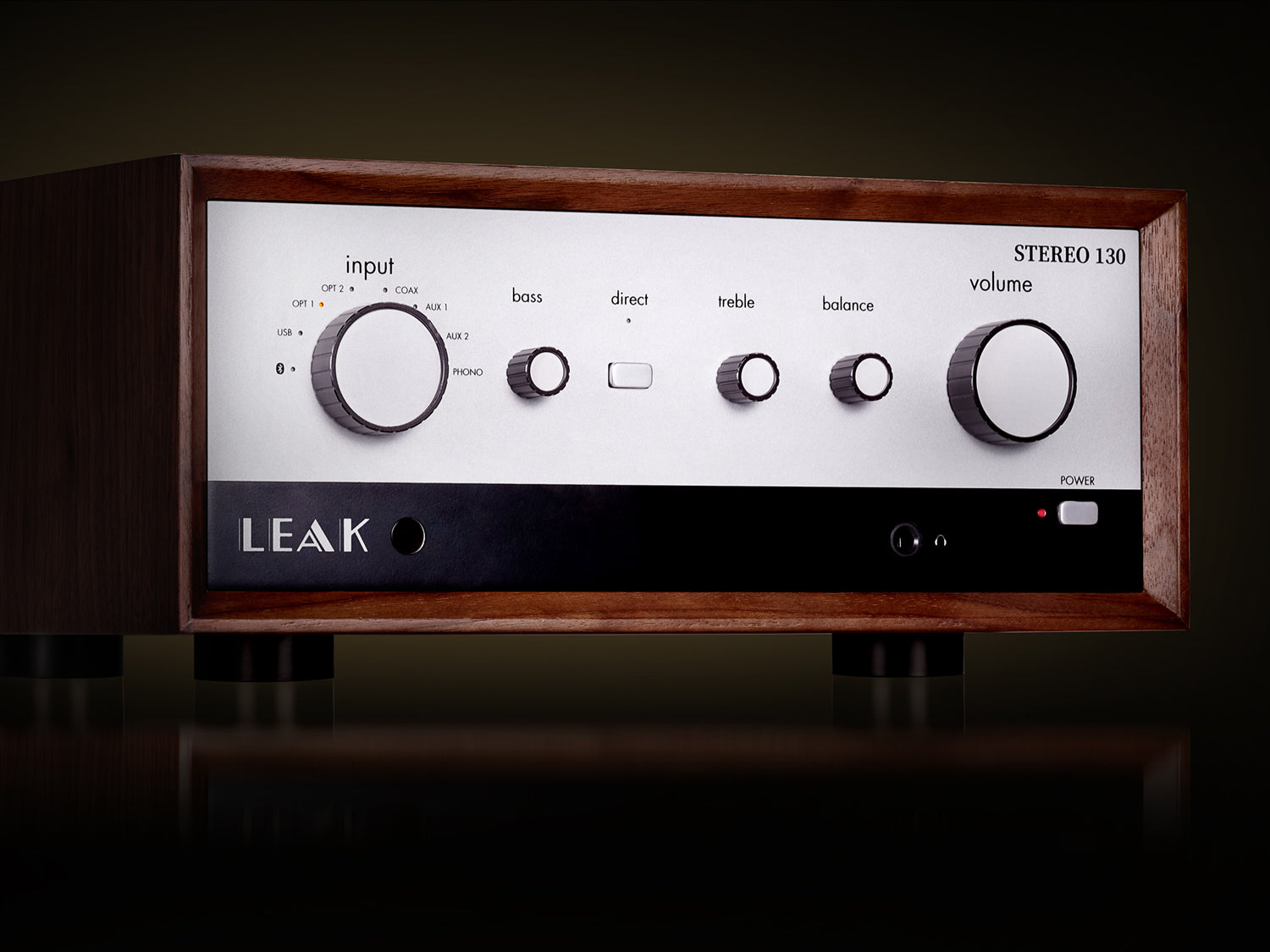
One of the biggest names of the mid-twentieth-century British hi-fi scene, LEAK made a highly anticipated return in 2020 after a four-decade break. The revival was marked by the launch of the LEAK Stereo 130 integrated amplifier — combining the timeless appeal of classic LEAK design with cutting-edge audio technology. It quickly became one of the most talked-about releases in the hi-fi world, capturing the imagination of music lovers who appreciate both vintage style and modern performance.
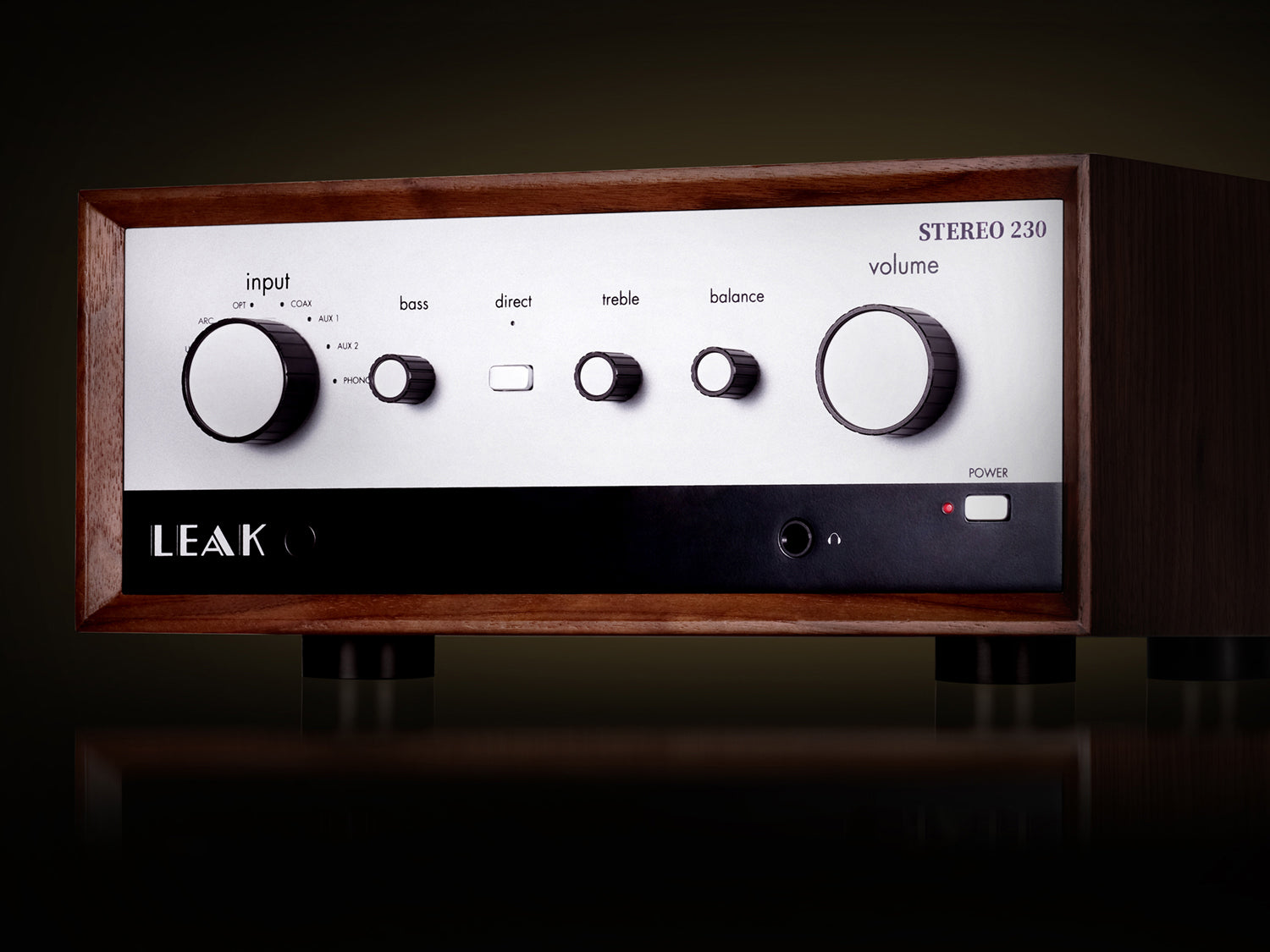
Building on this momentum, LEAK expanded its range with the introduction of the Stereo 230 integrated amplifier. Offering greater power, upgraded circuitry, and an enhanced DAC stage for digital sources, the Stereo 230 is designed as a more advanced option than the Stereo 130, whilst retaining the signature aesthetic that defines the brand. Today, LEAK continues to celebrate its legendary heritage, delivering products that honour the spirit of hi-fi’s golden age whilst embracing the demands of contemporary audio enthusiasts.


One of the biggest names of the mid-twentieth century hi-fi scene, LEAK returned in 2020 with its first new products since the 1970s. The arrival of the LEAK Stereo 130 integrated amplifier and LEAK CDT CD transport rapidly became one of the most talked‑about hi-fi events of the year, followed at the end of 2022 by a second integrated amp, the Stereo 230 – all fusing the vintage appeal of classic LEAK design with state‑of‑the‑art audio circuitry.

Founded in 1934, LEAK is one of the most important names from the early years of the British hi-fi scene, responsible for many technological ‘firsts’ throughout the 1940s, ’50s and ’60s. For example, the Point One series of valve amplifiers introduced in 1945 were the first to reduce total harmonic distortion to 0.1 per cent, while its Sandwich speakers heralded true-piston cone action by sandwiching polystyrene foam between outer skins of stiff aluminium foil. Such was LEAK’s engineering excellence that its 1955 Trough-Line is still considered one of the finest FM tuners ever made.
Although thoroughly modernised internally, the current LEAK Stereo 130’s wood-clad external design is based on another LEAK classic – the Stereo 30 integrated amplifier, which was the first commercially available all-transistor amplifier upon its arrival in 1963. This groundbreaking amp was famously owned by Jimmy Hendrix, among other ’60s luminaries.

The Stereo 130’s innate musicality is hardly surprising given the hi-fi handiwork involved. At its core is a Class AB power stage arranged in a dual-parallel configuration, drawing on many decades of amplifier design experience to deliver 75W per channel into eight ohms, and 115W per channel into four ohms. A substantial low‑noise 270VA toroidal transformer is followed by 2x15000uF reservoir capacity, helping the amp to maintain firm control of the music whilst enabling excellent dynamic range.
Bass and treble tone controls – a feature passed down from the original Stereo 30 to the Stereo 130, and now the Stereo 230 – enable sound to be tailored to suit the varying characteristics of different analogue and digital sources. If preferred, these tone controls may be bypassed to deliver the shortest possible signal path to the precision analogue volume stage, which is controlled by a high-quality motorised ALPS potentiometer.


